World's ancient empires
Following the destruction of the Kingdom of Judah (586 BC), the king of the Neo-Babylonian Empire, Nebuchadnezzar II (605-562 BC), wondered what would happen to his empire and the world. God gave him a dream that greatly disturbed him, and he asked his advisors to tell him what he had dreamed and what its interpretation was. A young man from the Judean exiles named Daniel was found, who begged the Almighty God of Israel to see the dream and interpret it. God heard him. In the dream, God revealed future events to the king, to the people of that time, and to us today.
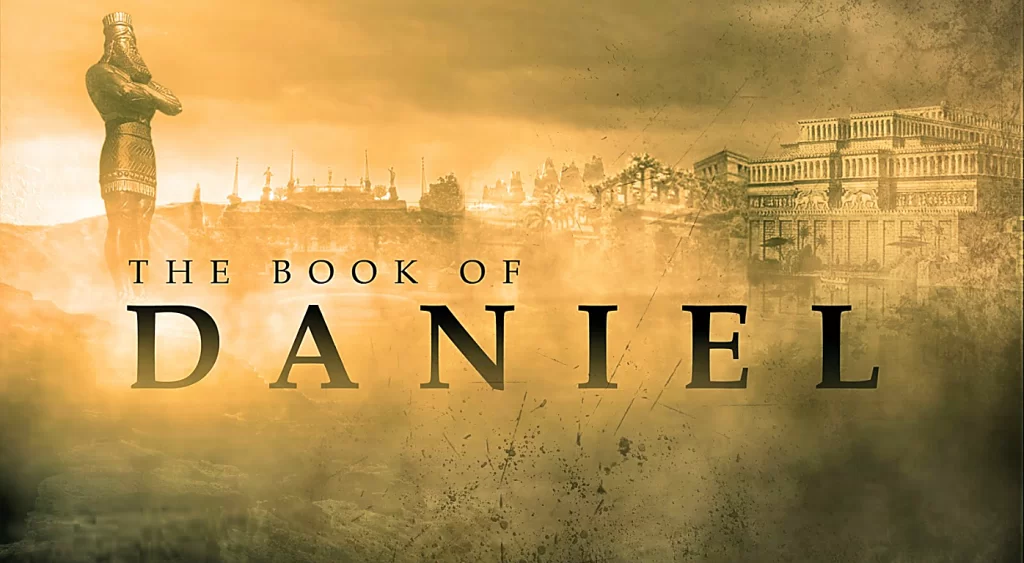
He saw a statue with a head of gold, a chest of silver, a belly of bronze, and legs of iron, the underside of which was iron mixed with clay. He saw a huge rock cut out of which a stone struck the statue and broke it in pieces. The stone grew and filled the whole earth.
The golden head was the Neo-Babylonian empire, which was to be replaced by another empire (the silver chest and arms). As silver is less valuable than gold, so it will be with that empire – it will not be as famous and successful as the golden head. After the silver chest was to come another empire – the belly of bronze and finally an empire like the legs of iron. Finally, those kingdoms are to be broken by the coming of the eternal kingdom, which will fill the whole earth.
Later, Daniel received a vision where the empires were likened to animals. A golden head like a lion, a silver chest like a bear, a bronze belly like a leopard with four heads, and iron legs like a monstrous beast with ten horns. Daniel's tomb is still in Iran in the city of Susa.
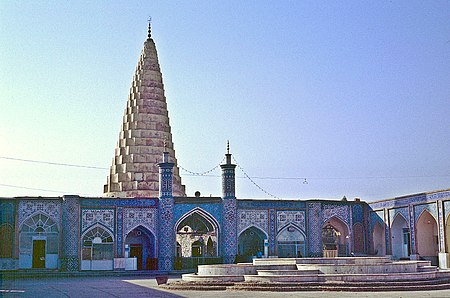
Daniel's Tomb
After the Neo-Babylonian Empire (606-539 BC) came the Medes and Persians (539-331 BC), where their king Cyrus the Great (559-530 BC) conquered Babylon in 539 BC. This was the bear empire and Cyrus the Great was called the father of nations because he freed the nations from slavery in Babylon. Among the freed nations was part of Israel, namely Judah. King Cyrus was mentioned by name in the Jewish prophecy of Isaiah, at that time about 200 years old, in connection with the rebuilding of the destroyed Jerusalem and the temple.
Prophet Isaiah
6 Thus says the Lord, the King of Israel, and his Redeemer, the Lord of hosts: “I am the first and the last; besides me there is no God. 7 Who is like me? Let him declare and declare it to me. Who has declared the future from of old? Let them tell him what is to come. 8 Do not be afraid, do not be dismayed. Have I not declared it to you before? You are my witnesses. Is there any God besides me? There is no rock, I do not know of any.”
9 All the makers of idols are worthless, and their delights are of no use. Their witnesses see nothing, nor do they know that they should be ashamed. 10 Who has formed a god, or cast his image, that it does not profit him? 11 Behold, all his followers will be ashamed, for the craftsmen are but men. Let them all gather together, stand up; let them be afraid and put to shame together. 12 The blacksmith forges iron, he works it in the fire, he shapes it with hammers, he forges it with his strong arm. He is hungry and grows weary; he drinks no water and is weary. 13 The carpenter stretches out a line, he measures wood, he marks out the contours, he traces it with compasses, until he makes it the form of a man, a noble man, that he may dwell in the temple. 14 He cuts down cedars, takes cypress and oak, chooses from the trees of the forest, plants a pine, and the rain gives it its growth. 15 Wood is for fuel for man; he takes it and warms himself; he kindles a fire and bakes bread; he makes a god of it, and they bow down to it; he makes an idol and worships it. 16 He burns half of it in the fire, lays meat on it, and eats it; he roasts a roasting pan and is satisfied. He warms himself and says, “I have warmed myself by looking at the heat of the fire.” 17 He makes the rest of it into a god, and worships it and worships it; he prays to it and says, “Deliver me, for you are my god!” 18 They do not know, nor do they understand, for their eyes are too dim to see, and their hearts are too dim to understand. 19 He does not take it to heart, he does not understand, therefore he does not think thus: “I burned half of the wood in the fire, I baked bread on its coals, I roasted meat and ate to the full. With the rest I made an abomination, I bowed down to the log.” 20 He feeds on ashes, his heart deceives him and deceives him. He cannot save himself, nor say, “Is not what is in my right hand a lie?”
21 Remember these things, O Jacob, O Israel, for you are my servant. I have formed you, you are my servant, O Israel, I will not forget you. 22 I will blot out your transgressions like a cloud, and your sins like a cloud. Return to me, for I have redeemed you. 23 Sing, O heavens, for the Lord has done this. Sing, you lower parts of the earth; break forth into singing, O mountains, the forest and all its trees, for the Lord has redeemed Jacob and glorified himself in Israel.
24 Thus says the Lord, your Redeemer, who formed you from the womb: “I, the Lord, am the Maker of all things; I stretch out the heavens and spread out the earth. Who will help me? 25 I will frustrate the visions of false prophets, I will make fools of diviners, I will turn wise men into fools and turn their knowledge upside down. 26 I will confirm the word of my servant and carry out the counsel of my messengers. I say to Jerusalem, ‘You will be inhabited,’ and to the cities of Judah, ‘You will be built;’ and I will raise up their ruins. 27 I say to the deep, ‘Be dry!’ and I will dry up your rivers. 28 Cyrus I call upon my shepherd. He will fulfill all my desires. He will say to Jerusalem, ‘You will be built!’ And to the temple, ‘Your foundations will be laid!’”
1 Thus says the Lord to his anointed, Cyrus, whose right hand I have taken, to tread down nations before him, and to loose the girdles of kings, to open before him the gates, that the gates may not be shut: 2 “I will go before you and make the hills level, and I will break in pieces the gates of bronze, and cut in pieces the bars of iron. 3 I will bring out the treasures of darkness, and the hidden treasures of secret places, that you may know that I am the Lord, the God of Israel, who calls you by name. 4 For the sake of Jacob my servant, and for the sake of Israel my chosen, I have named you; I have given you a name of honor, though you have not known me. 5 I am the Lord, and there is no other; there is no God besides me. I have girded you, though you have not known me, 6 that you may know from the rising of the sun and from its going down that there is none besides me. I am the Lord, and there is no other. 7 I form the light and create darkness. I work righteousness. and I create misery. I, the Lord, create all these things. 8 Let the heavens rise, and let the skies pour down righteousness; let the earth open up, and let salvation spring up; let righteousness spring up with it. I, the Lord, have created all these things.” 9 Woe to him who strives with his maker, and the clay with its potter. Can the clay say to him who fashions it, “What are you doing? There is no skill in your work?” 10 Woe to him who says to his father, “Why do you beget?” and to his wife, “Why do you give birth?” 11 Thus says the Lord, the Holy One of Israel, and his Maker: “Will you question me about my sons and judge the work of my hands? 12 I have made the earth and created man on it. My hands have stretched out the heavens and all their host I have commanded. 13 I have raised him up in righteousness, I will make all his ways straight. He will build my city and let my captives go free without price or reward,” says the Lord of hosts. 14 Thus says the Lord: “The wealth of Egypt and the wealth of Ethiopia and Sabean, men of stature, will come to you and be yours. They will come after you in chains; they will bow down before you when they pray to you, ‘There is only God with you, for the gods are nothing.’” 15 Truly, you are a God who hides himself, the God of Israel, a Savior. 16 They will be ashamed and all of them will be disgraced. The makers of idols will be put to shame together. 17 The Lord will save Israel with an everlasting salvation. Do not be ashamed, nor be disgraced forever. 18 For thus says the Lord, the Creator of the heavens, the God who formed the earth and made it, who established it; he did not create it in vain, but formed it to be inhabited: “I am the Lord, and there is no other. 19 I have not spoken in secret, in a dark place of the earth; I have not said to the descendants of Jacob, ‘Seek me in the remotest parts of the desert.’ I am the Lord. I speak what is right, I declare what is true. 20 Gather yourselves together and come, draw near together, you who have been saved from the nations. Those who carry their wooden idols and pray to a god that does not help are ignorant. 21 Declare this, bring it up, and take counsel together: Who has declared this from the beginning, and declared it from ancient times? Am I not the Lord? There is no God besides me. There is no true God and a savior besides me. 22 Turn to me and be saved, all the ends of the earth, for I am God, and there is no other. 23 By myself I have sworn, and my mouth has gone out in righteousness, a word that will not return: To me every knee shall bow, every tongue shall swear. 24 ‘Only in the Lord,’ they will say to me, ‘Is there righteousness and strength?’” They will come to him and be ashamed, who were zealous against him. 25 He will obtain righteousness through the Lord, and in him all the descendants of Israel will be glorified.
Under King Cyrus, these prophecies were fulfilled and the Judeans were released from captivity to the land that God had promised to Abraham. The construction of the temple and Jerusalem began. The temple was completed on February 21, 515 BC during the reign of the Persian king Darius I (522 - 486 BC) according to the prophecies of Jeremiah (604 BC), which he had less than 20 years before the capture of Jerusalem.
Prophet Jeremiah
1 This is the word that came to Jeremiah concerning all the people of Judah in the fourth year of Jehoiakim the son of Josiah, king of Judah, which was the first year of Nebuchadnezzar king of Babylon, 2 which the prophet Jeremiah declared to all the people of Judah and to all the inhabitants of Jerusalem: 3 “From the thirteenth year of Josiah the son of Amon, king of Judah, until this day, these twenty-three years, the word of the Lord has come to me. I have spoken to you, rising early and speaking, but you have not listened. 4 The Lord has sent to you all his servants the prophets, rising early and sending them, but you have not listened or inclined your ear to hear, saying, 5 ‘Turn now, each one, from his evil way and from the evil of your doings, and you shall dwell in the land that the Lord gave to you and to your fathers forever. 6 Do not go after other gods to serve them and to worship them, Do not provoke me to anger with the work of your hands, and I will not harm you.’ 7 But you have not listened to me,” declares the Lord, “but you have provoked me to anger with the work of your hands to your own harm.” 8 Thus says the Lord of hosts: “Because you have not listened to my words, 9 I will send all the families of the north,” declares the Lord, “and Nebuchadnezzar king of Babylon, my servant, and I will bring them against this land, against its inhabitants, and against the nations around it. I will make them a curse and an object of horror, a hissing, and a perpetual desolation. 10 I will take away from them the voice of mirth, the voice of gladness, the voice of the bridegroom, and the voice of the bride, the sound of the millstone, and the light of the lamp. 11 This whole land will become a desolation and a waste, and these nations will serve the king of Babylon seventy years. 12 When seventy years are accomplished, I will punish the king of Babylon and that nation,” declares the Lord, “for their iniquity, and for the land of the Chaldeans, and I will make it an everlasting desolation. 13 I will send upon that land to fulfill all my words that I have spoken against it, I have spoken against her all that is written in this book, as the prophet Jeremiah prophesied against all the nations. 14 Many nations and great kings will enslave them, and I will repay them according to their deeds and according to the work of their hands.”
Jeremiah's prophecy after the capture of Jerusalem around 586 BC, the return of God's people to their land after 70 years of captivity.
1 This is the text of the letter that Jeremiah the prophet sent from Jerusalem to the elders, the priests, the prophets, and all the people whom Nebuchadnezzar had carried away captive from Jerusalem to Babylon. 2 This happened after King Jeconiah, the queen mother, the court officials, the officials of Judah and Jerusalem, the craftsmen, and the metalworkers had left Jerusalem. 3 He sent it by the hand of Elasah the son of Shaphan and Gemariah the son of Hilkiah, whom Zedekiah king of Judah sent to Nebuchadnezzar king of Babylon to Babylon: 4 “This is what the Lord Almighty, the God of Israel, says to all the exiles I have sent from Jerusalem to Babylon: 5 ‘Build houses and live in them; plant gardens and eat their fruit. 6 Take wives for yourselves and have sons and daughters; give your sons in marriage and give your daughters in marriage, so that they may have sons and daughters, that they may multiply there and not be diminished. 7 Seek the welfare of the city to which I have sent you into exile, and pray to the Lord for it, for in its welfare you will prosper.’ 8 Thus says the Lord of hosts, the God of Israel: ‘Do not let your prophets and your diviners who are among you deceive you, nor let them give you any heed to your dreams that you dream, 9 for they prophesy falsely to you in my name; I have not sent them,’ declares the Lord. 10 For thus says the Lord: ‘When seventy years are completed for Babylon, I will visit you and fulfill my promise to you by bringing you back to this place. 11 For I know the plans I have for you, declares the Lord, plans for peace and not for disaster, to give you a future and a hope. 12 When you call on me and come and pray to me, I will listen to you. 13 You will seek me and find me, when you search for me with all your heart. 14 I will be found by you, declares the Lord, and I will restore your fortunes and gather you from all the nations and from all the places where I have scattered you, declares the Lord, and I will bring you back to the place from which I have sent you into exile. 15 “You say, ‘The Lord has raised up prophets for us in Babylon.’ 16 But this is what the Lord says about the king who sits on David’s throne and about all the people who live in this city and about your brothers who did not go with you into exile: 17 This is what the Lord Almighty says: ‘I will send the sword, famine and pestilence on them, and I will make them like bad figs that cannot be eaten. 18 I will pursue them with the sword, famine and pestilence, and I will make them an object of astonishment, a curse, an object of horror, a taunt and a reproach among all the kingdoms of the earth, to all the nations where I have driven them, 19 because they did not listen to my words, declares the Lord, ‘even when I sent them my servants the prophets, even though I sent them again and again, but you did not listen,’ declares the Lord. 20 “Therefore hear the word of the Lord, all you exiles whom I have sent from Jerusalem to Babylon. 21 This is what the Lord Almighty, the God of Israel, says about Ahab son of Kolaiah and Zedekiah son of Maaseiah, who are prophesying falsely to you in my name: ‘I will hand them over to Nebuchadnezzar king of Babylon, and he will kill them before your eyes. 22 This curse will be taken from them by all the exiles of Judah who are in Babylon: “The Lord will make you like Zedekiah and like Ahab, whom the king of Babylon roasted in the fire, 23 because they have committed folly in Israel and have committed adultery with their neighbors’ wives and have spoken lying words in my name, which I have not commanded them. I know and am a witness,” declares the Lord.
In the Bible we have a detailed description of the construction of Jerusalem and the temple during the time of the Persian Empire – the bear in the books of Ezra and Nehemiah. Description of the edict of King Darius I from the book of Ezra for the construction of the temple in Jerusalem.
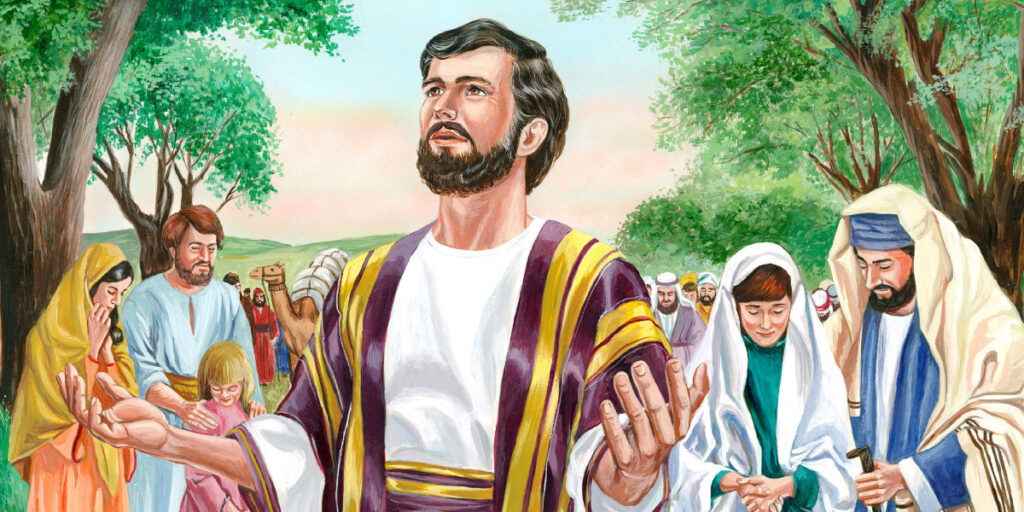
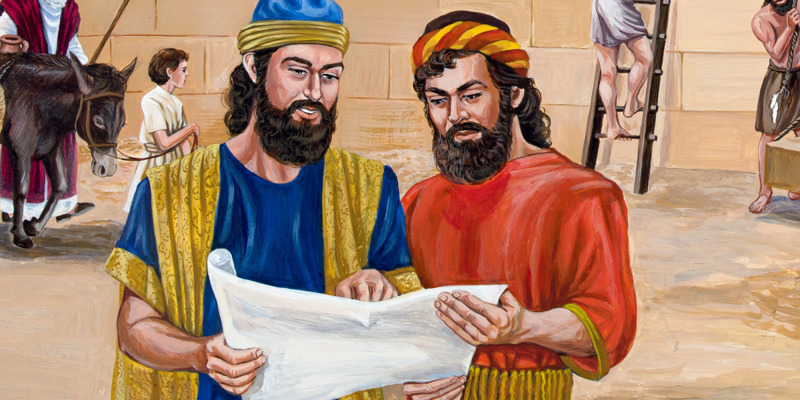
Ezra
6 “Now therefore, Tattenai, governor of the region beyond the River, and Shethar-bozenai, and his associates, and the officials of the province beyond the River, go forth from there! 7 Let the work on this house of God be done; let the governor of the Jews and their elders rebuild the house of God on its former site. 8 I issue a decree concerning the manner in which you are to deal with the elders of the Jews who are rebuilding this house of God: From the king’s revenue, from the tribute of the region beyond the River, let the expenses of these men be paid without delay, so that the work may not be hindered. 9 And whatever is needed, bulls, rams, and lambs for burnt offerings to the God of heaven, grain, salt, wine, and oil, let them be given them daily without fail, whatever the priests in Jerusalem require, 10 so that they may offer acceptable sacrifices to the God of heaven and pray for the well-being of the king and his household. 11 Furthermore, I issue a decree: Whoever does not obey this decree, let a beam be pulled out of his house, and let it be set up and nailed to it, and let his house be turned into a heap of ruins. 12 May the God who causes his name to dwell there overthrow any king or people who dare to do otherwise and to destroy this house of God which is in Jerusalem. I, Darius, have issued a decree. Let it be strictly observed.”
Each world empire is likened to a part of the statue from a dream and to a beast. This is an image of the spiritual background of each empire that devours its inhabitants. Behind each empire stand dark spiritual beings and a battle for human lives is underway. Outwardly, this is manifested by ideologies, religions and lifestyles of people. The Persian empire of the bear was a little different from other beasts like the lion and leopard, which are purely carnivores and the bear has about 20-40 % of meat in its diet, and much of that is carrion and beetles, otherwise it feeds on plant food, even cereals. The Persian empire was not a typical empire, because the nations had great freedom both in national expressions and in terms of language, culture and religion. There is a record in the Bible that when the Persian king wrote to the nations in his empire, he wrote to each nation in their own language and script. During the reign of King Artaxerxes I (486–465 BC), the beast of the Persian Empire also appeared, attempting to destroy the entire nation of Israel in the empire. The event is described in detail in the book of Esther.
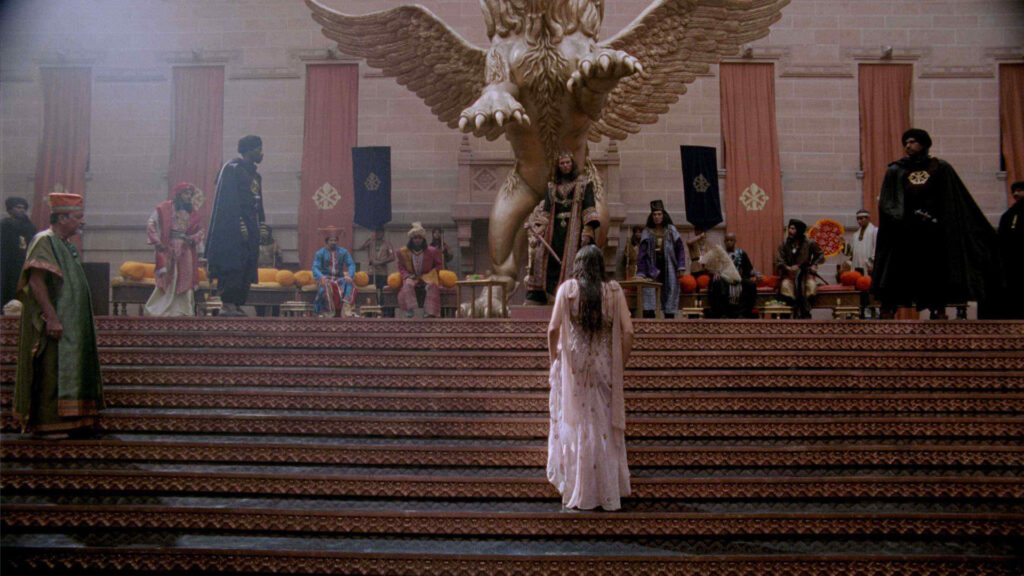
After the Persian Empire came the Greeks and Alexander the Great (336-323 BC) in 333 BC at the Battle of Issus and a second time in 331 BC at the Battle of Gaugamela defeated the Persians and their king Darius III (336-330 BC) and took control of the Persian Empire. After his death, his four generals took over and divided the empire among themselves - the 4-headed leopard.
After the Greeks in 146 BC -395 AD, the Romans came. During their world domination, the Savior of the world, Jesus of Nazareth, came and unleashed a wave of divine power that the Roman Empire fought fiercely against. They threw Christians to hungry beasts and people enjoyed themselves. The Roman Empire outwardly accepted Christianity with the Edict of Milan in 313 AD, but eventually the empire fell and Christians continued their activities to this day.
The Rock of Eternity in the Bible is always an image of God, and the stone cut out of Him is His Only Begotten Son, who became man as Jesus of Nazareth. He gave His life as a ransom for the lives of us humans, when He was brutally tortured and murdered as a result of our transgressions of the Creator's laws. After His death on the third day, Jesus rose, was taken to heaven in front of over 500 witnesses, and in heaven He was crowned as King of kings and Lord of lords. His rule on earth is still being strengthened, according to the dream that was given to the Babylonian king Nebuchadnezzar II. in the second year of his reign in 603 BC
 English
  Slovak
  Russian
  German
  French
  Spanish
  Hungarian
  Chinese
  Greek
Greek